
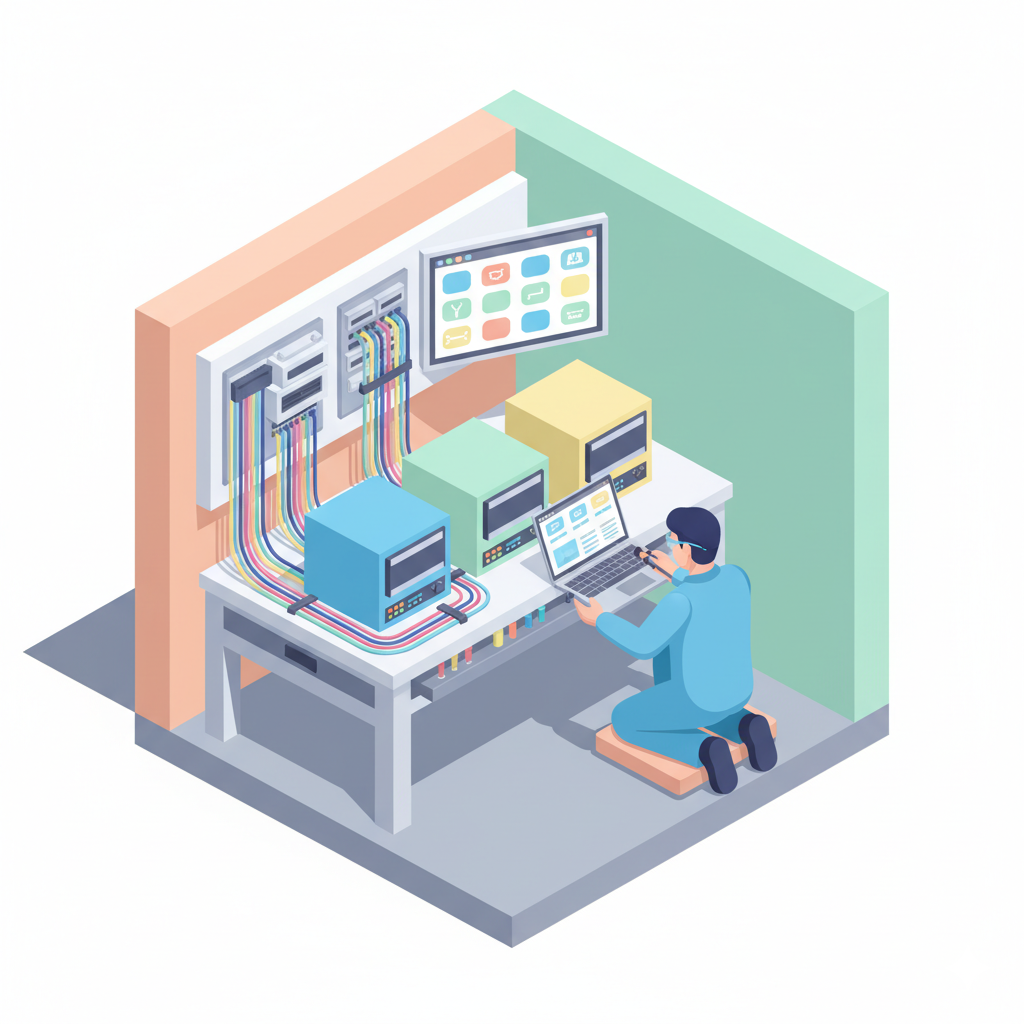
Multi-Panel System Integration
Modern production facilities rarely rely on a single panel. There are typically main distribution panels, sub-panels for individual lines, and machine control cabinets that all need to communicate. ElektroBee helps design and implement inter-panel integration so the entire system works as one.
Integration Approach
We start with network topology mapping that identifies every node, communication protocol, and data path between panels. This approach ensures:
- Network addresses are defined upfront so no conflicts arise when new panels are added.
- Communication protocols are aligned using Modbus RTU, Modbus TCP, Profinet, or Ethernet/IP as required by each device.
- Inter-panel cable routes are protected with trunking, conduit, or armoured cable to prevent electromagnetic interference.
Data Synchronisation
Once physical connections are in place, we configure data exchange between PLCs and HMIs. Production data, alarm status, and process parameters can be monitored from a single point without physically moving between panels.
We also ensure that a single-node failure does not disrupt the rest of the network. Network architecture is designed with appropriate redundancy for the criticality level of your operations.
Network Documentation
Every inter-panel connection is documented in a network diagram listing IP or slave addresses, cable types, and route lengths. This documentation simplifies troubleshooting and future expansion planning.
Expansion Support
Our integration design reserves capacity for additional panels. When new production lines are added, new panels can connect to the existing network without altering configurations already in service.
ElektroBee ensures your integration is secure, structured, and ready to grow alongside your facility.